
Checking for a Warrant in Washington
Washington posts no public active-warrant list on its police page. So build the warrant check from three pieces: the state court search, the Washington County Clerk, and local law enforcement. Before starting, gather the exact legal name, date of birth, citation or case number, and approximate court date. Details save calls.
- Search Iowa Courts Online by name, exact date of birth, case ID, or citation number. Select Washington County when asked.
- Read the public docket for failure-to-appear, warrant, bond, service-return, recall, payment, or disposition events. A docket may show an event even when its document is restricted.
- Call the Washington County Clerk of Court at 319-653-7741 to identify the issuing court and ask whether a shown warrant is active, served, recalled, or resolved.
- For Washington Police service context, call 319-653-2256. For sheriff-held status or records, call 319-653-2107.
- If a warrant may be active, speak with an Iowa attorney before appearing unexpectedly. Confirm the proper appearance, payment, bond, or recall procedure and then verify the outcome.
Washington Warrants and the Independent-PD Exception
Washington runs its own police department, a rarity among the county's larger cities. The sheriff's contract list covers Kalona, Riverside, Wellman, Ainsworth, Brighton, Crawfordsville, and West Chester, and Washington is not on it. That matters for a warrant. A Washington citation or investigation starts with Washington Police, while a county deputy handles matters outside the city or a sheriff-assigned service task. The official Washington Police Department page lists the department at 215 E Washington Street, phone 319-653-2256.
That page identifies the agency and its contacts. It offers no warrant form, roster, or status promise. Ask Washington Police about the agency and service; ask the Clerk about the court record and any judge-controlled recall.
Washington Police and Municipal Court
Washington has its own police department but no separate municipal court. Iowa Code §364.22 sends a city municipal-infraction proceeding to a magistrate, district associate judge, or district judge. A city officer can still write the citation. City Hall keeps its administrative records. The court case itself lands in Iowa District Court. So do not ask City Hall to certify a warrant or trust its payment pages to clear court debt. Call Washington Police for incident, citation-origin, or service questions. The Washington County Clerk at 224 W Main Street holds the docket, court date, warrant event, fine balance, and required court procedure.
Washington City Hall Is Not the Warrant Court
Local routing point: Washington City Hall and Police share the 215 E Washington Street civic address, but City Hall is not a municipal warrant court. Court records and public-terminal access are at the county courthouse, 224 W Main Street.
The official City Hall and council source documents the civic location.
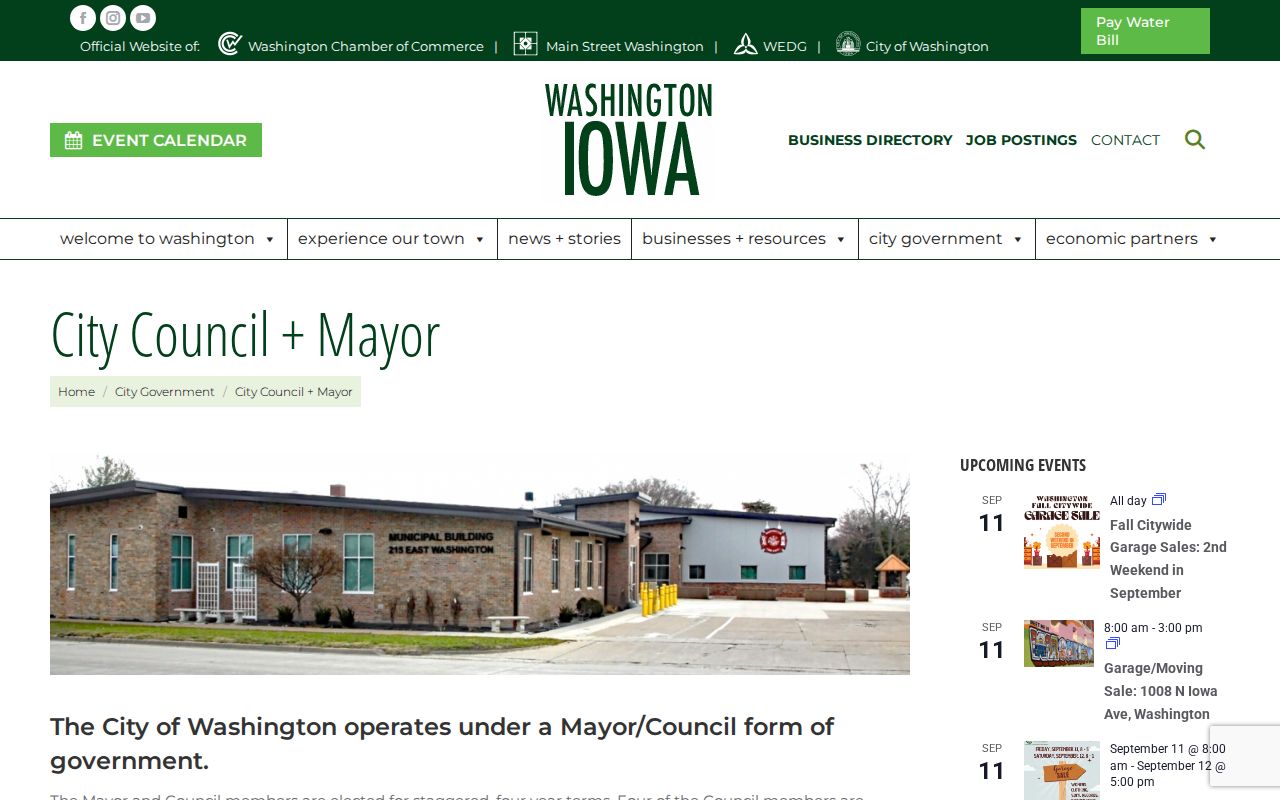
The building is easy to spot, but it is not a warrant counter. City Hall runs city government. Washington Police handles city law enforcement, the Clerk keeps the district-court case, and Sheriff Records holds sheriff-side service and records questions. The Jail answers custody logistics only after the case and warrant are identified.
Washington Warrant Types
Trust the docket's exact wording. Iowa sources say “arrest warrant” and “warrant for failure to appear” far more often than any bench-warrant label. “Capias pro fine” is not a Washington County term.
| Warrant type | How it may arise in Washington | Issuing authority |
|---|---|---|
| Failure-to-appear warrant | A willful missed appearance required by a police-issued citation may trigger §805.5. | Iowa District Court judicial officer |
| Criminal arrest warrant | A complaint and supporting facts establish probable cause under §804.1. | Magistrate or authorized judicial officer |
| Municipal-infraction process | A Washington ordinance matter enters district court, not a separate city court. | Magistrate, district associate judge, or district judge |
| Search warrant | Police seek authority to search described property; this is not a self-check record. | Authorized Iowa judicial officer |
From a Washington Citation to a Warrant Docket
A citation from Washington Police does not become searchable overnight. The Iowa Judicial Branch allows 10–14 days for a law-enforcement citation to post, and weekends or holidays can stretch that window. Search by citation number first. Otherwise use the exact name and date of birth. If nothing appears after 14 days, call the Washington County Clerk. Do not assume the case vanished. Miss a required appearance willfully, though, and Iowa Code §805.5 provides for an arrest warrant sent through the clerk and returned to the issuing agency. Paying is not automatically the fix. Iowa guidance warns that online payment counts as a guilty plea unless the citation requires an appearance. Ask instead whether the Washington court wants payment, a new date, bond, an appearance, or a recall order.
Inside a Washington Warrant Record
Iowa Courts Online organizes public information by case, not by city warrant number. Washington County publishes no local numbering pattern and no public list of active or cleared codes. Never infer status from a made-up format. A case identifier can run 17 characters, so copy it exactly as the court supplies it. A marker like VERIFY CASE ID is just a prompt. It is not a real numbering pattern.
| Case ID and county | Identifies the court file and confirms which county controls it. |
|---|---|
| Party identity | Name and matching details; verify common names with exact date of birth. |
| Charge or citation | The offense, scheduled violation, municipal infraction, or complaint. |
| Docket event | May state failure to appear, warrant issued, served, returned, recalled, bond, or disposition. |
| Bond or balance | May be visible or restricted; it is not a guaranteed release amount. |
| Status | Confirm with the Clerk because court and service records may update at different times. |
Washington Police and Civil Warrant Service
A judge signs a warrant, but a different agency carries it out. Washington Police handle city arrests and investigations, while the Washington County Civil Office openly lists arrest warrants among the papers it serves. Call Civil at 319-653-6651 during normal business hours. Keep in mind that Civil serves papers; it cannot undo a judge's recall decision. If a docket entry leaves you guessing which agency got the warrant, ask the Clerk. Then go to that agency directly about service. Dispatch is not a warrant research counter. Use 911 only for a true emergency. For nonurgent questions, the county's 319-653-2107 nonemergency line and the Records Division are the sheriff's published channels. The same split shapes a records request. Washington Police may hold the incident or officer report. The Clerk keeps the district-court filing and docket. The Sheriff may hold the service or return record. A good Washington request names your own case, the rough date, any citation or case number, and the exact record you want. Iowa Code Chapter 22 does not force an office to build a new warrant certification or hand out a legal opinion. Investigative reports can be withheld, and an unserved outstanding warrant can hold the court case open until service. Asking which office holds the public version beats mailing one broad request to everyone in Washington County.
How Washington Warrants Fit the County System
A Washington case may begin with city police, but the court's authority runs through the Iowa District Court for Washington County. The Sheriff, Washington Police, or another authorized agency may then receive the warrant for service. Note that Iowa's IOWA System is for law enforcement only, not a public statewide warrant search.
Warrant flow: Washington Police citation or complaint › Iowa District Court judicial review › Washington County Clerk docket › Washington Police or Sheriff service › court return and disposition
For the countywide process and resolution sequence, see the Washington County warrant records overview. Identify the issuing case before calling the Jail or visiting any public-safety building.
Before Paying a Washington Traffic Warrant
Start with the Clerk. Confirm the case number, total balance, the missed setting, and whether a warrant is actually active before paying anything on a Washington traffic matter. The official Iowa pay-a-fine page warns that paying online usually counts as a guilty plea unless an appearance is required. A balance showing online does not mean payment alone recalls the warrant.
- Ask whether online payment is allowed or an appearance is required.
- Ask whether a payment plan, bond, or judge-signed recall is necessary.
- Save the receipt and any signed order.
- Recheck the Clerk and assigned serving agency before treating the matter as cleared.
Confirm a Washington Warrant Recall Twice
Never assume one record tells the whole story. A payment receipt, an attorney filing, a new court date, or a verbal instruction does not prove that every operational record changed. Ask the Clerk to confirm the judge recalled or disposed of the warrant, and when that action was entered. Then check with Washington Police or Sheriff Records if that agency held the service assignment. If custody or bond logistics are in play, the Washington County Jail sits at 2185 Lexington Boulevard, 319-653-5902. Its page publishes no special warrant window, list of accepted bond methods, or walk-in surrender guarantee. Calling the Clerk and an attorney first keeps you from leaning on details Washington County has never published.
Washington Warrant Records and Public Access
Access hinges on who holds the record and its status. Iowa Courts Online offers basic public case information, and the Washington County courthouse has a public terminal. A narrowly written records request can go to the proper custodian, but an unserved warrant, sealed filing, or juvenile record may stay off limits.
Key rules:
Iowa Code Chapter 22 establishes access to government records subject to lawful confidentiality restrictions.
Iowa Code § 804.1 governs arrest warrants after a complaint and probable-cause showing.
Iowa Code § 232.147 restricts juvenile court records.
The Judicial Branch request guidance sends district case-record requests to the county Clerk. Complex requests may need to be in writing, and retrieval, review, copying, postage, or redaction costs can apply in Washington County.
Washington Warrant Search at the Courthouse
A courthouse terminal can open public links the basic online view hides, including some schedule, bond, or service-return details. The Washington County courthouse stands at 224 W Main Street, and the Clerk's telephone is 319-653-7741. Call before you drive over. Confirm access and whether your case can be viewed there. The District 8 directory requires phones off inside and bars recording devices and cell-phone cameras. Street parking surrounds the building, with accessible spaces set aside for jurors. Bring the exact name, date of birth, case or citation number, and a short note on the docket event you need. A terminal does not erase confidentiality. An unserved Washington arrest or search-warrant case, or a juvenile matter, can still be restricted. Clerk staff can explain access and procedure. They cannot advise whether to pay, surrender, seek a recall, or fight the case. Those calls may need a lawyer. When you search, compare the case title, county, case type, filing date, charge, disposition, fines and costs, and each docket entry that matters. Schedules, bonds, and service returns may appear through links the basic view lacks. If a warrant event shows up without its document, write down the date and exact wording and take both to the Clerk. Do not photograph the screen or courthouse papers; the published rules forbid it. A warrant from another Iowa county belongs to that issuing county, so its controlling status and resolution steps must come from there.